

- The History of First Baptist Church of South Plainfield
- Two Hundred Years and Growing
1792 – 1992
The Community of faith now known as the First Baptist Church of South Plainfield began meeting on December 11, 1792, two hundred years ago.
Initially the Samptown Baptist Church, we were first housed on the land which is now known as, Hillside Cemetery at Samptown on New Market Avenue in South Plainfield.
As has ever been the case, with small congregations supported totally by the members, the church went through a time of financial difficulty and held a meeting on August 30, 1854, to discuss the advisability of relocating to New Brooklyn (the current center of South Plainfield) where we could be closer to the population center.
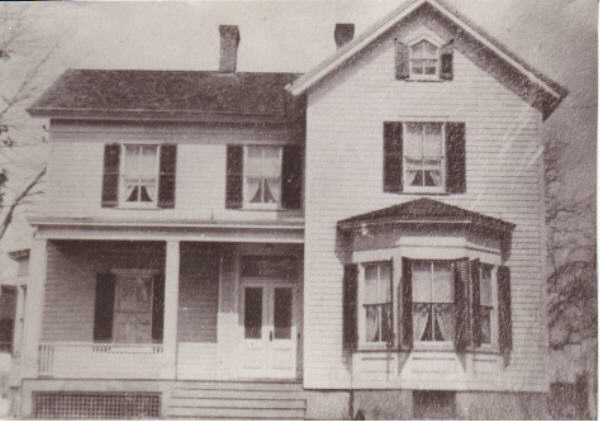
The church continued as it had been for some time and built our parsonage in 1870 on Plainfield Avenue. This building still stands and is now McCriskin’s Home for Funerals.
The Reverend A. Armstrong began his pastorate with us on August1, 1878. He strongly advocated moving the church toward the center of town and prayed for guidance.
On April 1, 1879 a spark from a passing Leigh Valley locomotive set fire to the church building.
Young Julia Ward, living on the corner of Plainfield Avenue and Samptown, saw the flames and ran to the parsonage to alert the minister. Believing it to be a the sign for which he had prayed, Pastor Armstrong was heard to say, “Praise God from whom all blessings flow.” Plans were started to find a new location and during that time the congregation met in the upper room of the schoolhouse at New Brooklyn. This schoolhouse later moved to 214 Hamilton Boulevard.
After the church burned at Samptown, Lewis Meeker, who joined the church in 1877, found a nail in the ashes and it is today on display in Henderson Hall.
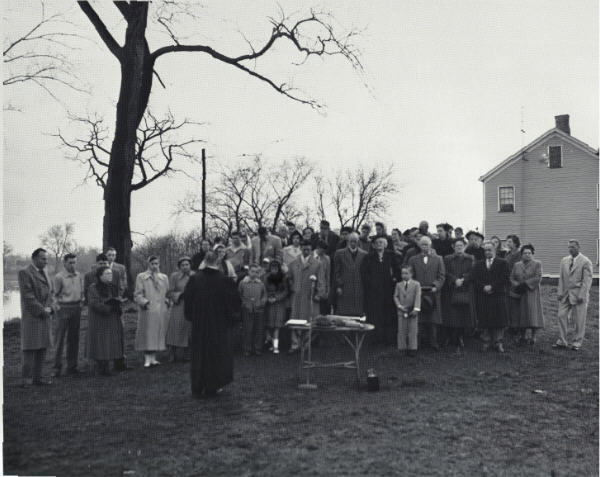
The congregation purchased a lot next to the school from Mr. Drake, August 6, 1879 and plans for a new church were accepted and a contract given upon receipt of an insurance settlement from the railroad for $2,000. The work on the new church building began, and on Thursday, September 11th, 1879, the cornerstone was laid at 2:30 P.M. A large crowd gathered on a nice clear day and “It seemed as if God was blessing us in the efforts that were being put forth by His people”. Speeches were made by ministers form the surrounding towns, First Baptist Church of Plainfield and others, including the Pastor, Reverend Armstrong. The choir sang, papers and records were placed in a small tin box and cemented in the stone which was situated in the northwest corner of the foundation, second stone from the top. A collection was taken that afternoon amounting to $300. Sadness came upon the flock on the night of September 17, 1879 when the cornerstone was broken into and box and contents were stolen. No trace of the robbers could be found.
However, on October 2., 1879 a new box and records were placed in the stone and cemented up as before. There is no
known listing of the contents of the original box and the records state that the replacements were as close to the originals as possible.
The new church was finally finished and a dedication service took place on January 2.0, 1880. The cost of the new church was $4,392.74, less the insurance received from the burned church of $2,000, leaving a balance of $2.,392.74. Collections had been coming in, and, as told by the grandparents of some of our present members the Reverend Armstrong paid for most of the debt, as he was able to do so at the time.
The first meeting was held in the new building February 28, 1880 with a membership of 104. On February 26, 1881 the church made a resolution “That as a church we consider it as very improper for members of this church to engage in social and party dancing.” Work in the church progressed both spiritually and financially during the years. However, this church was still known as “Samptown Baptist Church., so the congregation thought it best on April 28, 1883 to change its name to the “New Brooklyn Baptist Church” and the cemetery, which was part of the land on which the Samptown Church stood, should be called “Hillside Cemetery of Samptown”.
August 13, 1883 an organist was to be secured for morning and evening services at about $35 a year. On April 26, 1884 the envelope system was started.
After a few years the congregation thought it was time to paint the church. So, on August 30, 1884, they voted to have the church painted and paid $2.50 a day to the painter.
In May 1887 the cemetery and church sexton received $70 for the church and $40 for the care of the cemetery per year.
Across the back of the church property, church sheds had been built, but now the congregation had grown and by February 1889 new additional sheds had to be built to accommodate the number of horses and wagons.
As the Reverend Armstrong’s health wasn’t good, he resigned his pastorate, November 8, 1890. For a time the deacons carried on and candidates were interviewed. May 24,1891 the Reverend Ernest Thompson became the next pastor.
The hymn books were getting old and new ones were purchased on July 30,1891.
On October 5, 1892 the church celebrated its 100th anniversary. The service was held in the morning with singing and prayers and the church history of the first fifty years read. Minutes tell us it was it was very interesting and instructive, as it was a history from the first settling of the Baptist in New Jersey, also biographies of the Pastors of the first fifty years. After the service, all were invited to dinner which the ladies had prepared in the flax Factory located on the Southwest corner of Maple Avenue, opposite Spring Lake.
In the afternoon, more history of the present pastor, the Reverend Thompson, and addresses by Pastors of the Mother Church of Scotch Plains and the Grandmother Church of Stelton and the Second Daughter church of New Market were given.
June 1894 minute relate membership as 1321 the value of the church and grounds, $71300, the value of the parsonage was $3,000.
June 12, 1894 the Jewish residents of Plainfield bought a portion of the Hillside Cemetery of Samptown. They paid $12 per lot on the Southwest comer and $10 per lot on the Northwest side.
The Reverend Thompson having poor health resigned November 10 1894.
It is not certain when the name of the church was changed, for in the minutes of April 3, 1892 it was mentioned that the New Brooklyn Church changed its name to The South Plainfield Baptist Church and the again in the minutes of March 16,1895 it was voted again. August 20 1909 the changing was recorded at the courthouse in New Brunswick.
The next pastor called was the Reverend Thorns on June 23, 1895, but he resigned in September, the same year. The
Reverend Cubberly was called November 1, 1895 to be our pastor at a salary of $550 yearly and the use of the parsonage. Mrs. Caryle Crane of Plainfield, the Mayor’s wife, (1954) was a granddaughter of the Reverend Cubberly. During his pastorate, he often had roll calls and reunions at the church. Sometimes they came from near and far. On November 17, 1898 one of the roll calls, 73 were present. In March 1900 the church started to charge for the pews to defray expenses. A resolution was passed by the church “Resolved that members of the church who neglecting their church covenant obligations by refusal to aid in the financial support and by absenting themselves from its meetings shall report to the church by their presence within a period of three months from notice, if possible. In the event of failure to do so, such members shall be excluded from The South Plainfield Baptist Church, April 28, 1900”. The Reverend Cubberly had five children who were all good workers in the church, and with young people. The Reverend Cubberly left the pastorate in 1906.
The next pastor called was the Reverend C. W. F. Attlee, on June 1906. He too had a large family of children. A wooden fence which had been erected several years before in front of the parsonage and church, was taken down to improve the property and was used between the church and school property. At the annual meeting of April 6, 1907 discussion on raising money took place and six people promised to set hens and sell broilers, then turn the money over to the church. Up to this time, the church used kerosene lights. In February 1907, electric lights were installed and a receipted bill was turned over to the church by the Ladies Aide Society.
The parsonage on Plainfield Avenue was in need of repairs. The church needing money sold the parsonage in June, 1909 to Mr. and Mrs. Oscar Thorne. The Reverend Attlee moved to rented house and resigned in September 1909.
October 3, 1909 the Crozier Seminary sent a Mr. Joseph J. Allen to be our minister, holding said position until April 30, 1916. The choir at that time was in the back of the pulpit. Later, platforms were lowered and the choir placed on the left side of the pulpit. At that time there were only two cups used for the Communion Service. The Sunday School class raised funds to buy individual Communion Service and table.
The upper room of the sanctuary used as a Sunday School was inadequate for the growth of the school and church. The congregation voted July 16, 1911 to build an addition on the rear of the church to be used as a Sunday School and Recreation room, now call Fellowship Hall.
As the Reverend Allen was to be to be married, it was necessary to have a parsonage built on the Southside of the church lot, and to borrow $3,000. The Minutes stated, “The Pastor must have a home and there seems no place for rent -so build we must.” On September 3, 1991 another vote was taken to borrow $4,500 to take care of the two buildings but only have a mortgage of $3,500. The cost of building the parsonage would be $3,2.75. March 2.0 1913 the church authorized Pastor Allen to “Proceed to have the law enforced in regard to closing of stores and saloons on Sunday in our Village”.
The Reverend Allen started a Baraca Class of men and they helped the church spiritually and financially, a “Coal Social” was held, February 13, 1914. Circulars were sent out asking each one to bring, or send, the price of a hundredweight of coal in a little sack furnished. The price of coal then was 35¢ per Hundredweight. Wood was also brought in and used in the stove and heater.
Prior to this time, only Baptist were allowed to join the church. In April, 1916 the bylaws were changed so that any church member of any other denomination could join our church and hold office and be called an R Affiliated Member.”
The next pastor was the Reverend William Porter Townsend. He became our Pastor July 16,1916 and stayed until June 2.6, 192.1. His wife was a great leader with the ladies of the church and had a family of four girls and one son.
October 1919 the School Board needed room so they rented our Sunday School room for $30 a month.
February 1, 1920 R.B. Manning resigned as Sunday School Superintendent, after serving approximately fifty years. He was a wonderful man, holding clerkship, trustee and treasurer of the church for many years. His son Mr. Harry J. Manning succeeded him and held the position of Sunday School Superintendent for many years, He was also deacon, trustee and church clerk. His death was a great loss to the Church and community.
On January 25, 1920, a resolution was adopted by the church body and sent to Middlesex County Assemblymen H Calling upon you ‘assemblymen’ as our representatives in the Legislature to resist by influence and attempt to legalize in New Jersey sale of any liquor which our Nation’s Constitution, Congress, and Supreme Court have declared illegal and urging you to loyally advocate and vote for the ratification of the 18th Amendment now a start of our Nation’s Constitution for a law enforcement act similar to act of Congress passed to enforce said amendment. The members further pledged their support to such legislators as shall thus vote to represent the Christian and moral forces of our state.”
To show the spirit of the boys and girls of the Sunday School, they helped defray the expenses for the purchase of coal. And, in January, 1921, Gladys Thorne’s class of boys purchased the present bell by selling candy.
Our next pastor was a Mr. Everett Chapman, a student at Crozier who began his duties September 5, 1921 but only stayed for six months.
We had a supply of pastors for a time and different organizations helped in a great many ways. A Sunergoi Society was formed and organized by Mr. and Mrs. Robert Ritter. The undergo painted the Sunday School at a cost of $100 and had already raised about $400 to paint the church.
The church was in debt with a mortgage and many repairs were needed. May 28,1922 the Reverend J. E. R. Folsom from the Convention came and directed the collection for the mortgage and also sent to each of our 119 members showing our budget of $1,700 and quoting the following scriptures: “when uniting with the church we promised God and one another ‘To give as God hath prospered us, not grudgingly or of necessity, ect.’ Every man shall give as he is able,’ Deut.14: 22-29, ‘Remember the Lord Thy God for it is He that giveth Thee power to get wealth,’ Deut. 8: 18″ and a pledge card was enclosed to be returned signed, and the amount to be given.
May 18, 192.4, the entire day was given over to the celebration of canceling the mortgage. Different pastors from surrounding towns spoke both morning, afternoon and evening. Nearly $8,000 was collected. The ceremony of the bumming of the mortgage took place with prayer and hymn.
August 12., 192.3, the Reverend E. B. Williams was called as pastor and he was happy to have the privilege of being minister when the mortgage was bummed. He served until February 6, 192.7.
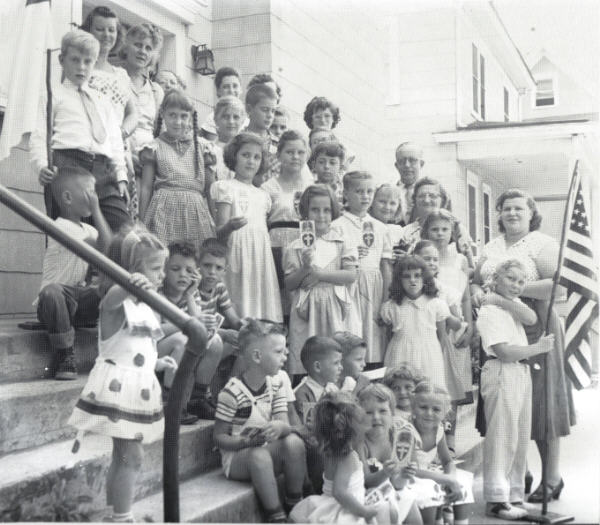
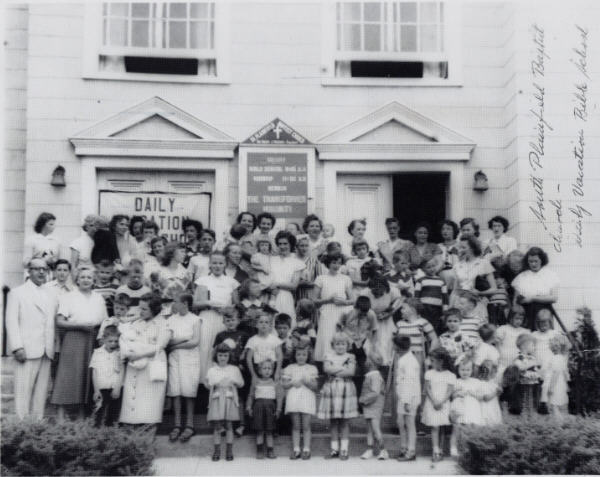
On June 4, 192.3, the Reverend Williams organized a Daily Vacation Bible School which had been continued for many years. The Reverend Williams also organized an Ushers Association.
June, 192.5 the Greek Orthodox Church used our church for their Sunday services from 4 -6 P.M. for period of time until their church was ready.
December 1925, a committee was appointed to select a piano or organ. Prices were obtained. An organ was too expensive, so it was decided to purchase a “Folorey Bros.” piano, Price $564. A humorous incident took place on Sunday morning during the Reverend Allen’s pastorate with the old Reed organ. It was very old and almost beyond usage for church services. The organist had been advising the church officials that sometime the organ would embarrass us. This particular Sunday morning, a visitor from the State Convention was offering the morning prayer, an old fashioned lengthy prayer, when the organ started to squeal. It was impossible to stop it, finally the prayer ceased, so did the organ.
June 19, 1927 , the Reverend Martin Brynildsen became our pastor and stayed until August 1, 1931.
January 20, 1930 the 50th anniversary of dedication of the church was held, five people being present who were at the opening of the church. One member was the organist at that time and she was asked to play the closing hymn.
January 18, 1932 Mr. William Taylor, a student at Crozier occupied the pulpit and in May 1932 was appointed pastor which position he held until april, 1933.
A new roof was put on the parsonage, July 1932, cost $60.
April 1934 until April 1939 the Reverend Dunham V. Reinig was a young man and very attractive with the young people, taking them to various missions and revivals. He had a wide relationship with a group of Evangelistic young people and great services were held at the church.
In September, 1939 the Reverend Cunningham was acting pastor, a granddaughter, Mrs. Mustafa Tekley, the former Janet Holstrom, is a member of the church. .
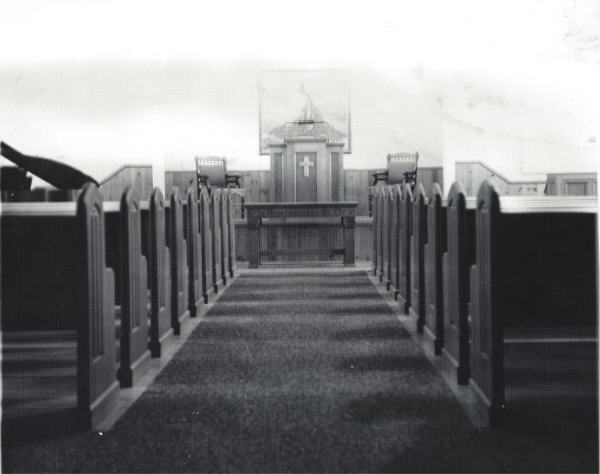
The Reverend George Teets was our next pastor from April, 1940 until February 25,1948. He was a wonderful worker. Both he and his father renovated the interior of the church, lowering the ceiling, laying new floors, installing new pews and lighting fixtures. Also the tower was arched and a steeple with an aluminum cross erected. The average attendance was 27, Sunday School 45. In April 1941 the constitution of the church was revised and rewritten, new hymnals for both church and Sunday School were purchased through subscription, friends and relatives giving “in memory of some loved one.” In November 1941. a campaign for money was started for a new furnace. March 1942, the anniversary committee started preparing for the celebration of the 150th commemoration of the work of the church, which was held October and November 1942.
November 1942, the Red Cross used our church recreation room as an air shelter and first aid emergency station, and room was used as a headquarters for sewing, classes in nutrition and first aid. They paid $2 for meeting and then donated $120 for two rest rooms.
August 1943, a picture ‘Christ in Gethsemane’ was presented to the church in memory of Mrs. Martha White by the Hamilton family.
A gift of a Pulpit Light was donated in memory of Winfred Disinger by her parents.
A gift of a light for the organ was donated in memory of Llyod Harris.
In 1943, the church started paying the organist $1 a Sunday and the first check of $4 was endorsed back to the church by Gladys Schmitt to start an organ fund, which grew from donations, dinners, etc. until we had an Aeolian-Skinner Organ installed and dedication of the same was November 7, 1947. The organ cost $3,550 at the time.
May 9, 1946 the “Perpetual Care Trust Fund of the Cemetery” was started.
The next pastor, John Givens served from March 1949 until May 7, 1950.
October 29, 1950 the church and parsonage were reshingled at a cost of $2,150. The church grounds were also beautified by shrubbery purchased and given by Mrs. Marion Sloan Flora.
October 29, 1950 the Reverend Emry J. Kocsis was selected to be our next pastor and was installed December 8, 1950.
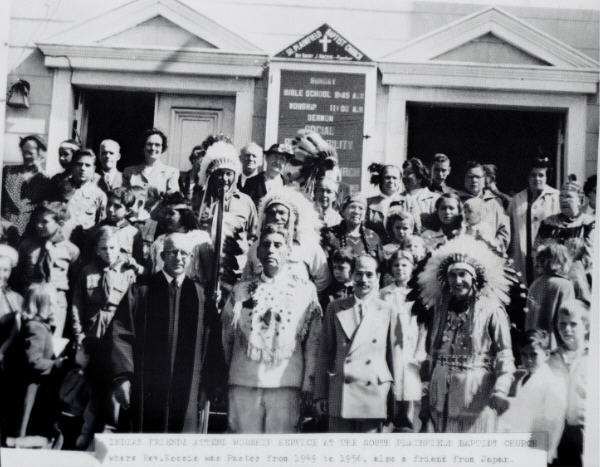
The Reverend Kocsis started “United Nations Day” in South Plainfield, October 1951, holding a celebration each year, leading a parade in New York of Indians of the Iroquois Indian Confederacy of the U.S. and Canada.
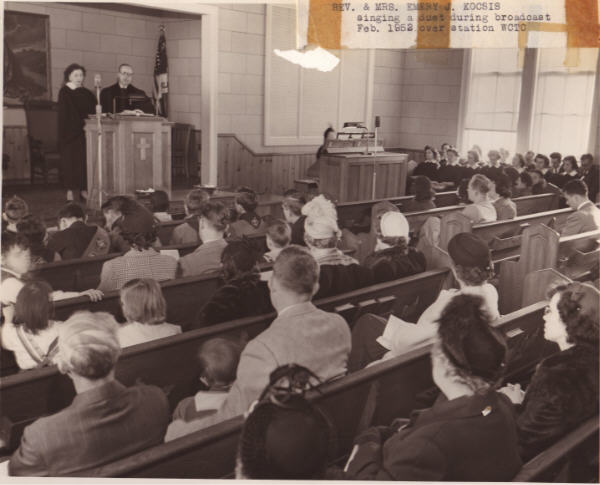
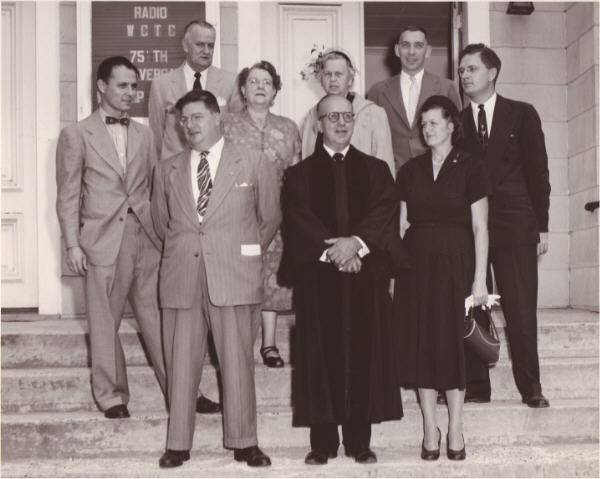
In February, 1952 our church broadcast its morning services over station WCTC, New Brunswick and again October 1954.
The Reverend Kocsis was given a new robe by the Women’s Federation and the choir held a music festival April, 1953 to purchase choir robes, costing $250.50.
Mrs. Mead Georgeson, bequeathed money to purchase chimes which have been installed in the organ. The chimes were dedicated December 27, 1953.
For many years our church had a group organized as “The ladies Aid Society-, later known as ~e Women’s Federation. , which contributed to the support of the church as well as to home and foreign missions. Due to the few remaining members of the Federation, the decided to disband and become members of a society call ‘The Evening Circle-. In December, 1953, the ‘Circle” gave $200 toward the new furnace and in the spring of 1954 purchased 10 folding tables and 100 folding chairs for $650, same paid for within two months after being purchased. New dishes and steel cabinets were also bought for the kitchen.
The Reverend Kocsis and family left the congregation on April 9, 1957.
On February 1, 1958, R. Melvin Henderson a Seminarian at Princeton was called to our church as Pastor. Originally from Alabama he and his wife, Betty, had a daughter, Daphne and their second child, Melanie, were born during their stay in South Plainfield.
Funds were approved in 1958 for a new education building to be attached to the rear of the present Fellowship Hall at the cost of $15,000. The men of the church volunteered to paint the new building and the church kitchen which was being remodeled.
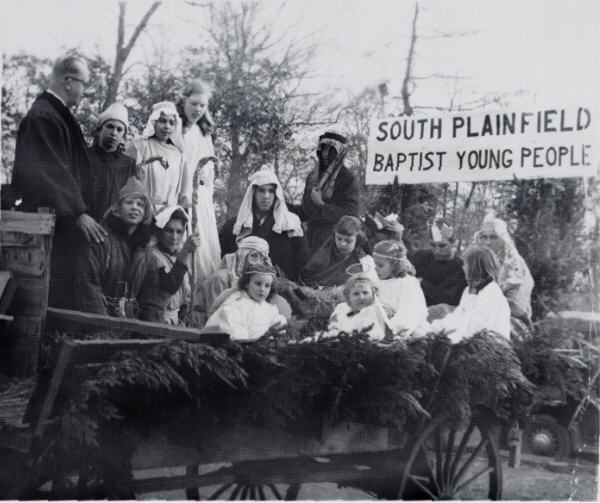
Although hired as a part-time Pastor and completing his seminary training, the Reverend Henderson was very active leader and particularly revered by the young people. He took an active role in the organization of the Baptist Youth Fellowship. :
The Reverend Doctor M. Henderson left the congregation in July of 1961 to become Dean of Crozier Theological Seminary. Henderson Hall where we are today was named in honor of this beloved man.
The Reverend Doctor Authur May of New Brunswick served as an intern pastor until the selection of the Reverend Ewing D. Bates, a graduate of Eastern Baptist Seminary.
In June, 1962 the Reverend Bates announced his plan to re-activate the Advisory Council to help evaluate church needs.
On November 14, 1962., the Reverend Doctor Lincoln Wadsworth of the American Baptist Convention made an inspection of the church property and made recommendations on the modernization and improvement of the existing structures ! and an extensive renovation project was begun. :
Friends of the Holz family donated a picture to the Sunday. School in 1962 of Jesus among the little children in memory of Gregory Holz who died after a long illness.
In 1964 Mrs. Hele Helriegel donated a painting to the Sunday School in memory of her grandfather, Oscar Zugbaum. .
In 1963, a Junior as well as Senior BYF was active in the church. The Senior Youth Fellowship raised funds to present Pastor Bates with a role. The Bates family left us in 1966 and moved west.
On April 12, 1966 a motion was made to change the name of the church to The First Baptist Church of South Plainfield and attorney, Howard Gran, was retained to handle incorporation.
The Reverend James Brown was called to our congregation August, 1966 and we were privileged to have him assist us in our building centennial anniversary in 1979, along with the Reverend George Teets and Reverend Emery Kocsis, both former pastors of our church.
During Reverend Brown’s pastorate, the use of the church audio-visual equipment and the use of the registration cards were instituted.
In 1967 the congregation celebrated its 175th anniversary.
Because of ill health the Reverend Brown gave up his Pastoral duties in 1968 but he and his family still worshipped with us.
After a series of interim ministers, the Reverend Gerad Thompson, was selected to lead our congregation in 1969. He brought with him his family of three daughters, Cheryl, Candace and Kathleen. Among his personal contributions were his wife Joanne, who inspired us with her beautiful soprano solos and his daughter, Candace who was our organist.
In 1970, a building fund was started to raise money for much needed aluminum siding and the project was completed in October 1971.
On November 17, 1971, the Austin Sloan Memorial window which graces the front of the church building was dedicated. The beautiful stained glass window is a gift of the Austin and Sloan families who have been members and leaders of our church for many generations.
The cross on the bell tower was dedicated on April 9, 1978 and is also a gift of the Sloan family.
In May of 1979, a grateful congregation honored the Reverend and Mrs. Thompson at a covered dish supper commemorating their ten years in Christian service with our congregation and also honoring the Robert White family who have moved from South Plainfield for their many services to the church.
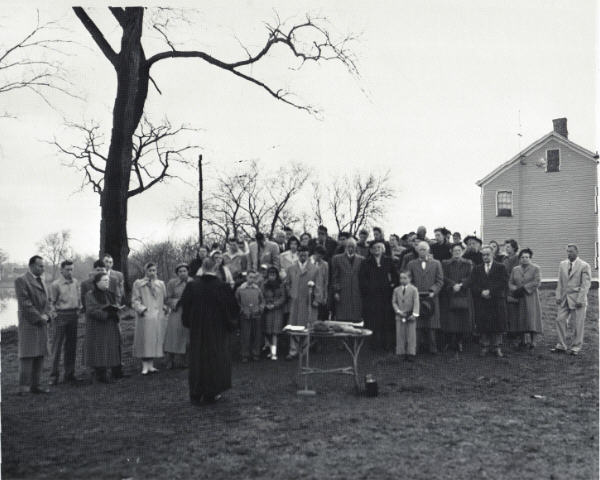
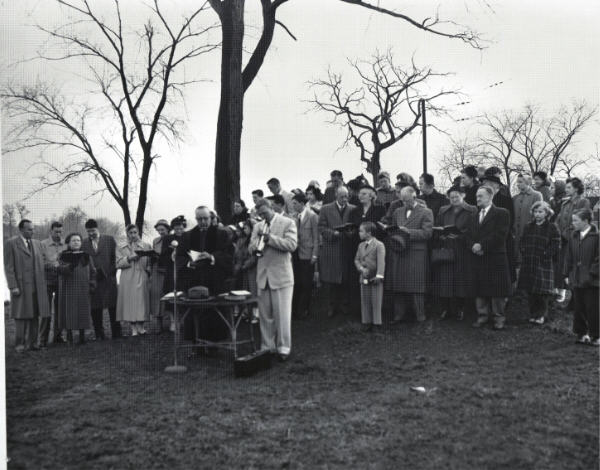
The Easter Sunrise Service was celebrated at our Cemetery on New Market Avenue and has been a tradition for many years. The Easter Fellowship Breakfast following the service has recently been revived.
The centennial celebration of the church building held on October 2.8, 1979, attracted a sizable group of past and present members as well as representatives of the press. Mayor and Mrs. Richard Kennedy and Mr. and Mrs. Larry Randolf of the South Plainfield Historical Society also attended.
The time box from the church cornerstone was opened and the contents displayed by trustee chairman Gordon Holz. A list of the contents is on display at the Arts and Artifacts exhibit today in Henderson Hall celebrating the congregational bi-centennial.
Pastor Thompson laid great stress on missions and visitation. New hymnals were purchased in 1981 to broaden our selection of contemporary offerings as well as old standards.
Pastor Thompson organized a weekly prayer meeting for spiritual growth and support.
Sunday School was very active under the direction of Mrs. Thompson.
Very suddenly all things changed on October 3, 1982, Gerard Thompson was taken to his final rest at the age of 53, leaving a grief stricken congregation along with his family. He had been our minister for 13 years and we felt the loss heavily.
The Reverend Anderson, our Area Minister at that time helped to bring us along and brought the Reverend Bill Burger as interim.
During this transitional period the congregation took solace from one another and used what might have been a time to splinter, to grow together in focus -our single goal being the preservation of this church.
The Reverend Bill Burger was a spellbinding speaker and although part time, carried on an active ministry to the youth of the neighboring Keystone Community Residence, teaching a special class in our Sunday School.
He encouraged awareness of the Bible through drama and we had Christmas and Easter plays performed by the congregation.
A pulpit committee was finally formed and the search for a new pastor began while the congregation undertook extensive renovating of the parsonage.
Storm windows, which were badly needed for the sanctuary, were donated anonymously in memory of the Reverend Gerard Thompson.
The culmination of our search was the call of Reverend Dennis Michael O’Neill from Eastern Seminary in Pennsylvania. The Lord sent him to us in July, 1984 and he is with us as host of the two hundredth year of this part of the body of Christ.
The Women’s Evening Circle held their first craft fair in December 1984, under the direction of Lynda Randolf who still chairs the event. This annual fundraiser generates income to support the extensive community service programs in which the group engages.
Pastor O’Neill was ordained in March 1986 at a ceremony attended by local clergy, church dignitaries and friends of Dennis from near and far. The women of the church gave a banquet and his first minister’s robe was presented to the newly ordained pastor as a token of love by his congregation.
The Sunday School continues to be a vital part of our ministry and small groups have formed meeting regularly for Bible Study and mutual support.
In 1987 a large chalk drawing of an Easter theme from Thomas Sandors “Gospel in Art” series was presented to Pastor O’Neill by Fredrick and Letitia Bladon in appreciation of pastoral care of their family members.
We had been blessed with the continued attendance of Reverend and Mrs. James Brown throughout the years following his resignation as pastor and were sadden by his passing on May 25,1987. Mrs. Brown remained with us until moving to Nashville, Tennessee with their daughter, Kathy.
Extensive structural renovation was done in the Fellowship Hall and Henderson Hall during the late eighties enabling the outreach work of the church to continue.
One of the most meaningful utilizations of the buildings is that of host to the guests from the FISH Homeless Program.
This work has been greatly enhanced by the beautiful new kitchen donated by some members of the church and the needful purchases and maintenance of the kitchen committee of the Women’s Evening Circle.
New American and Christian flags and preaching stoles with matching parament were given to the church by the Bladon family in 1990.
The commitment of service through Jesus Christ and the support of one another propels us toward our third century. We invite all those who have read this far to travel the road with us,
We give thanks to the One who has brought us to this place and we pray that He will bring us further still.
Centennial Celebration in 1992
By Janet Purcell Piggott
The First Baptist Church of South Plainfield, which is celebrating its Bicentennial throughout the month of December, is a congregation knitted together on both the threads of history and friendship/intimacy.
“I remember the first time that I walked into the sanctuary and met with these people,” says Rev. Dennis O’Neill, the current pastor. “It was like coming home to a gathering of old friends and family.”
Since the First Baptist Church of South Plainfield, NJ was founded on December I, 1792, eight generations of people have been born into the congregation and have lived out their lives as part of this sturdy family of believers.
The church was founded at a time when South Plainfield was still known as New Brooklyn and the people traveled to Scotch Plains for Sunday services. Most of the New Brooklyn folks were farmers who got together and decided it would be a good idea to have a church closer to where they lived and worked. They withdrew their memberships from the church in Scotch Plains and contacted the Philadelphia Baptist Association to begin the process for establishing a church of their own.
A small cedar wood building 28′ x 18′ was built. The interior was made of plain pine boards with no plaster and no ornamentation. The building was simple and functional.
From that original group of 21 practical people, three were nominated to serve as the first official pastor. They were Benjamin Coles, Jacob F. Randolph, and Benjamin Blackford. Jacob F. Randolph won the election by a large majority and began serving part time at a wage of 37 pounds 10 shillings a year. The rejected Mr. Blackford broke away from the gestating church and founded a church in the nearby city of Plainfield.
Perhaps one reason this congregation has stayed together for such a long period of time is that is was built on a strong foundation of people who were both strict and liberal at the same time. On September 29, 1796–more than a half century before the Civil War was to erupt–a black slave woman called Jane who belonged to a Mr. Richard Hat tar was received into membership.
Another progressive move occurred in January 18, 1880 when it was agreed that female members have the same privileges in meetings as men. And yet church lore tells another story of one very stern member in those early days who kept a close eye on the attendance of church members. If someone did not show up for Sunday services, he would visit that person in their home to find out why. If the excuse wasn’t good enough for him, that person was excluded from membership in the church until he or she publicly repented the backsliding. Only then was the person returned to full membership.
It was that kind of determination that saw this small band of Christians through the fluctuations of change, growth and expansion. In 1812, because the congregation had grown to 95 souls, a 20′ extension costing $700 was added to the building they had been occupying. And in 1833 a subscription of $2,350.50 was made toward the building of the new meeting house. These buildings, each in its own time, stood on the property which is now the Baptist Cemetery of Samptown on New Market Avenue.
As the church became more prosperous, members were assigned pews and pew rents which were applied toward the pastor’s salary.
Church records indicate that it was about this time that Rev. Jacob Randolph “left with 32 of the wealthier members to go to Plainfield.” This group founded what is known today as First Park Baptist Church in Plainfield.
In December 1851, Brother E. I. Runyon made a Resolution that the members of the church living in the vicinity of New Market be allowed to build a church there. In 1852 forty-five members of the New Brooklyn Baptist Church transferred their membership to what is now considered to be the “daughter” church, First Baptist Church of New Market.
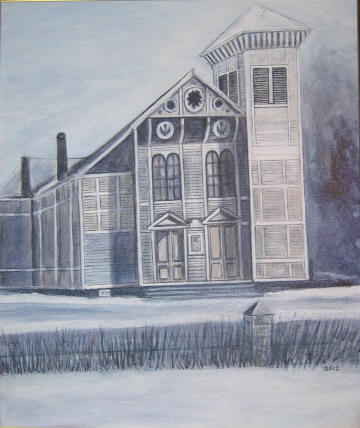 It wasn’t long after that, in 1878, the congregation became divided in its thinking. Some felt the present location was ideal while others felt it would be more desirable to move to the center of town. Heated arguments ensued and one night the pastor, Rev. A. A. Armstrong, was so upset that he left the discussions and closed himself in the parsonage which stood where the McCriskin Funeral Home stands now. The story that has been retold down through the generations is that on April I, 1879, while Rev. Armstrong was fasting and praying about the dilemma, a young girl named Julia chamberlain, ran into the parsonage crying out that the church was on fire. Sparks from passing train had ignited the wooden church building. It is said that Rev. Armstrong, deciding that this was a clear answer to his prayers, ran out to the porch and stood watching the flames reaching to the heavens. Some said they heard him singing the Doxology as he watched. “My prayers have been answered,” he is said to have concluded aloud.
Immediate steps were taken to build a church in New Brooklyn—right in the center of town—with the $2,000 insurance from the fire.
Both the interior and exterior of the church have changed in the ensuing years. The sanctuary’s original ornate high ceilings are actually still there but are now hidden beneath the lowered ceiling facade.
Originally the building had two front doors that stood to the left and right of a sign bearing the church name. Entry is now made through a pair of sturdy doors that are centered under a magnificent round stained glass window. Donated by the Austin family, the five Austin children are represented in the design of the window by the five-pedaled daisies—their mother’s name and her favorite flower.
One of those children, Floyd Austin, who is seventy-five years old now, remembers walking to Sunday School on Sunday mornings with his grandfather, Civil War Veteran Edward Benjamin Austin. “He would give each of us five kids pennies to put in the collection plate,” Mr. Austin recalls. “In those days if a grownup put a quarter or a dime in the plate, well that was all there was. We thought it was great to be putting pennies in.”
Mr. Austin goes on to tell about people arriving for Sunday School at 9:45 in horse-drawn wagons. The horses were cared for in barns that stood behind the sanctuary where Henderson Hall is now located. The regular service began at 11:00. “People would rest on Sunday afternoons and then come back at 7:00,” he says. The evening service was well attended. The timing of it worked out well for people like Mr. Austin’s father who worked on the railroad and was unable to attend morning worship with Mrs. Austin and the children.
“Baptists at that time didn’t do anything on a Sunday,” Mr. Austin goes on to say. “We couldn’t even go to a baseball game. No movies. But a couple of times we walked up to the baseball game with Douglas Manning whose father was Postmaster and one of the upper people in town. We figured if it was okay for Douglas Manning to go, it was okay for the Austin kids too. Well, our father heard about it and…oh ho…!”
The Austins weren’t the only children in the congregation that got into a little devilment on Sunday afternoons and evenings. Betty Emmons remembers going for Sunday night services and climbing along the backs of the pews with her friends. “Church was the focal point of our social lives,” she says. “We’d go on Sunday nights and sing and giggle.” She still remembers her favorite dress that she would wear to morning worship. “It was blue with yellow flowers on it,” she says.
“And Rev. Reinig used to take the young people on outings in his big black touring car,” Mrs. Emmons continues. “It was cold in the winter,” she says as she recalls coming in to the potbelly stove that stood just outside where the kitchen is now.
During her growing up years, Mrs. Emmons attended church and Sunday school regularly—but when she fell in love it was with a young man of another church. Bill Emmons attended The First Baptist Church with his wife occasionally over the years and he must have felt good about what he found there. “He eventually joined on his own and even became a Deacon, that’s how much this church meant to him” Mrs. Emmons says proudly.
For many years, The First Baptist Church of South Plainfield, which was renamed several times, was the only Protestant church in town. It was previously known as Samptown Baptist Church, New Brooklyn Baptist Church, South Plainfield Baptist Church, and finally its present name was adopted.
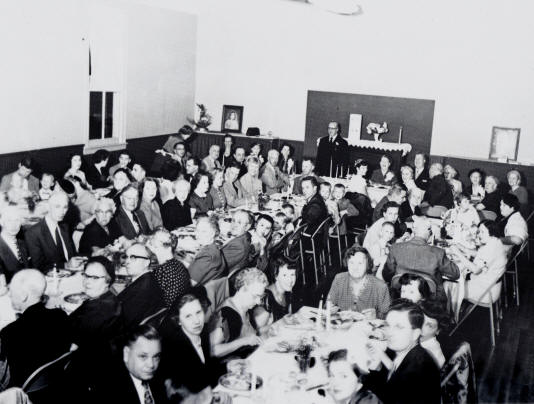 In 1909, at a cost of $4,600, a new parsonage was built next to the church and a large wing, called The Baptist Recreation Center, was attached to the back of the sanctuary. The church had become the center for social activities in town.
The “old timers” like to think back to the social events when young and old alike would get together for the simple joy of just being with each other and having a good time.
They speak of the picnics that were held in Riverside Park in Bound Brook “right along the Raritan” where there were games and races and a lot of good food. “The women would pack basket lunches,” Floyd Austin recalls. “There were no hot dogs in those days!”
And Christmas—“We always had a get together in the evening and Santa would come and give us each an orange tied up in a big red bow and a small box of chocolates in a box with holly on it,” Mr. Austin says. “Even during the depression. I don’t know where the money came from, but we had it even then. “
Although The First Baptist Church of South Plainfield has never been a wealthy congregation in terms of money, it has always managed to be a vital part of the community in which it lives. Every election day people that worked the polls could look forward to a good spaghetti dinner there. And once a month the ladies of the church would serve the Rotary Club a sumptuous dinner. At that time the kitchen was in the basement and there were big cook stoves down there and long tables would be set up. “Boy those women could cook,” was a recent comment by a gentleman who attended regularly. “They’d make roast beef, prime rib, potatoes, vegetables and wonderful homemade pies!”
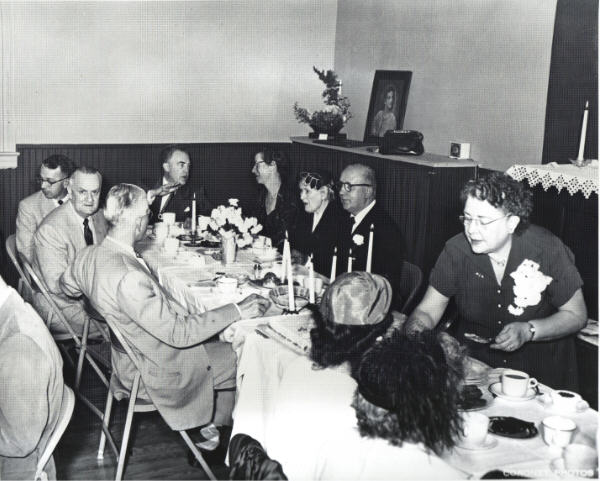
The women of the church—and the men—can still turn out a delicious meal. This past October 27 was the annual Homecoming Sunday and after the special morning worship service, church members and a large number of guests were treated to buffet luncheon that would have brought even the Rotarians back for more!
Homecoming Sunday is a rather new tradition in The First Baptist Church of South Plainfield. A few years ago it was decided to invite former members back for a time of worship and fellowship. Mr. Austin says, “We decided to tell them ‘come on you old people who used to come. Come on back, we want to talk to you. We want to have a little fun’ .” Each year attendance for that special Sunday has been growing and this past year a large group of people attended. Former Interim Pastor William Aurger and Rev. J. Kenneth Mart of the First Baptist Church of New Market participated in the service.
Although the great majority of those attending the Homecoming Service have never left the church, a few had gone for a number of years but are now attending regularly again. Janet Tekley is one of those people. She’d been part of the church family since she was five years old, but
she left the congregation for a number of years. “The day I came back into the door of the church after an absence of about fourteen years,” she says, “I felt as if I had been here only yesterday. People came up to me and said, ‘glad to see you, Janet.’ Nobody said to me ‘where were you?’ They just brought me home. “
The concept of “home is a very important one to this congregation. In 1990 they became involved in The F.I.S.H. homeless Program, a hospitality network to aid women and children who have become homeless. “When we were asked to do this, most of us had at least sixty reasons why we were no t ready for it,” Janet Tekley says. “Whatever resistance we had–and I was one of the ones that resisted it hardest–we just stepped in and did what we were called to do because w~ knew we did not have a choice. It was what was needed to do and we did it.”
Every two months The First Baptist Church of South Plainfield is the night host for up to fourteen women and children. Each family has its own private space in one of the Sunday School rooms. The participants are considered to be guests of the church and are always treated as such. Along with the help of other volunteers from other congregations and community groups, church members prepare the evening meal and eat with the guests. They play games with them and help the children with their homework. In the morning they are taken to school, to work, or to the day church, Wesley United Methodist. “Everybody benefits in one form or another from this program. I can’t think of one person in the congregation who hasn’t participated in some way,” says Pastor Dennis M. O’Neill.
One of the strong characteristics of this congregation is that its members participate in any way they can. Those that have special skills donate their time and expertise. One of those persons is Gordon Holtz. A skilled carpenter, and a man who has an eye for a good bargain, Mr. Holtz attends auctions and going-out-of-business sales where he has purchased items such as cabinets for the church kitchen and the double doors that now serve as the church’s main entryway. Mr. Holtz and other church members installed the cabinets in the kitchen and the new front doors. Their most recent project will be the installation of a shower in the are~ that is used by the Homeless guests.
“Gordon Holtz and his wife, Judy, have been part of the backbone of this church,” says Rev. O’Neill who goes onto explain that Mr. Holtz has recently mastered the use of the computer and has computerized all the cemetery records. He also paved the roads in the cemetery, digs the graves and maintains the cemetery grounds.
The First Baptist Church of South Plainfield is a congregation made up of people from many walks of life. The membership is diverse while at the same time being homogeneous in its common belief system.
Michele Lewkow says she finds this to be a place “where people can come and find the seeds of faith. There are outlets here to help develop that. We have active ministries and those ministries have gotten us out of ourselves and into ~ larger community. In a lot of ways it helps us as much as it helps them.”
Janis Nietzer agrees. Speaking as one of the newer members of the congregation, she says, “This church has a lot of needs. It’s the kind of church that really could be spending a lot of money on itself and its building, but any money that is raised always goes back to the community and to different programs.” She tells about attending a women’s meeting when she first came to the church, “They were talking about this large amount of money they raised and what to do with it. I was so impressed with this little group of women and that amount of money they raised and the amount they decided to give away. I thought, ‘this is really wonderful.”‘
The people of the congregation credit their growth in that direction to the leadership of Pastor O’Neill who has been with the church since his graduation from Eastern Baptist Seminary in 1984. “This has become away to put a face to our theory, our beliefs,” he says.
Floyd Austin served on the Pulpit Nominating Committee that ultimately presented Rev. O’Neill to the congregation. Mr. Austin’s words echo the voices of the church body when he speaks of the selection of Rev. O’Neill. “It was love at first sight,” he says. Mr. Austin, who is known to be a strong silent type of man, a retired railroad worker, proudly says, “I was at his Ordination and I said to the committee of all the ministers, I said, ‘We love this man, Dennis O’Neill. He was sent here to us let’s give him the green light’.” And so they did.
Michele Lewkow remembers that Rev. O’Neill asked her and Jackie Buckalew to help serve communion at the Ordination Service. “Of all the things I could have done to help that day, serving communion was something special. I had never served before and I was glad I could do th3t,” she says. “I don’t think he realized how important that was to me when he asked me.”
Janis and Rob Nietzer agree that Rev. O’Neill is a motivating factor in the steadily increasing membership in the congregation. “He attracts younger people…and we’re doing things together like going to a football game, etc.” Mrs. Nietzer says.
The Nietzers have two small children of their own and they are foster parents to many others, they are very interested in what the Sunday School is offering their children. “Our concern is more ‘Are they feeling good in the church? Do they know they are special and that they can turn to God for help?”‘ Mrs. Nietzer says. “The children are learning specific Bible stories, but more than that, they are feeling welcomed here. It’s a general feeling that they are learning.”
The Nietzer children may not realize it yet, but that sense of belonging they are experiencing is precisely what the rest of the congregation says about this church family.
Michele Lewkow says it simply, “I love that place. It’s really home to me.”